
Introduction: Beautiful Mehndi Ideas for Every Occasion
Imagine getting ready for Eid. Your favorite outfit hangs neatly in your wardrobe, your sandals are ready, and you want one final detail to complete your look. A beautiful mehndi design on your feet can make the occasion feel even more special.
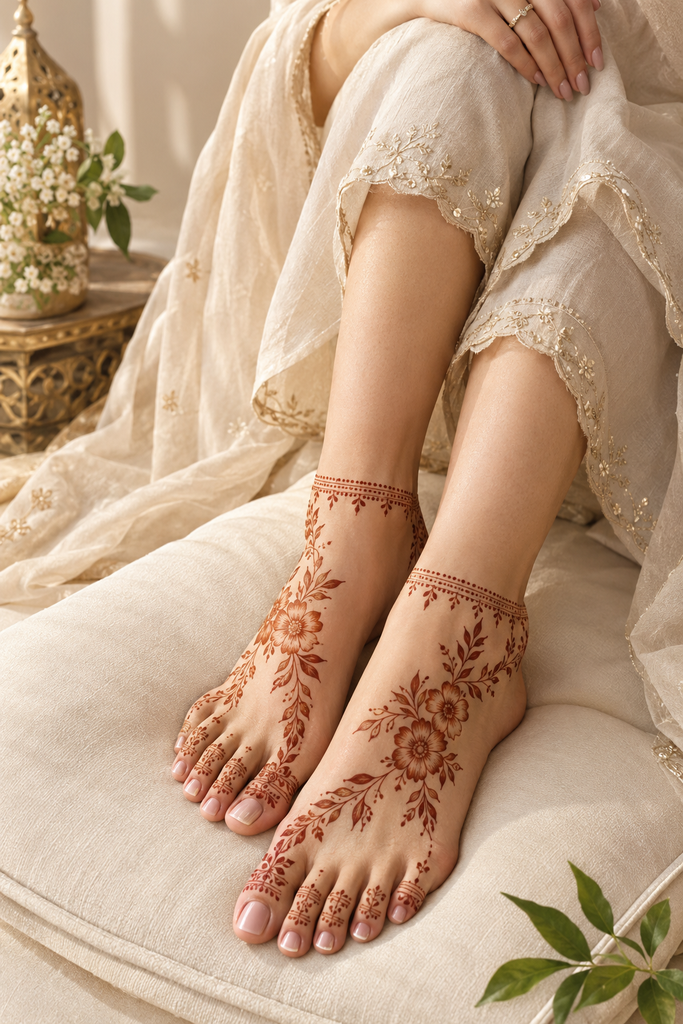
You do not need to cover your entire foot to create an attractive look. Sometimes, one small flower near the toes or a delicate vine along the side of your foot can make a beautiful difference. The secret lies in choosing a design that matches your personality, outfit, and occasion.
These patterns work well for Eid, weddings, engagement parties, family gatherings, and casual celebrations. Many designs also suit beginners because they use basic shapes such as dots, curved lines, petals, and leaves.
In this guide, you will discover 25 beautiful ideas, learn how to choose the right pattern, and explore budget-friendly ways to enjoy mehndi at home. You will also find practical application tips, aftercare advice, and image prompts to help you visualize each design.
Whether you prefer delicate floral art, traditional paisleys, or modern geometric patterns, you can find inspiration here.
Why Choose Simple Foot Mehndi Designs?
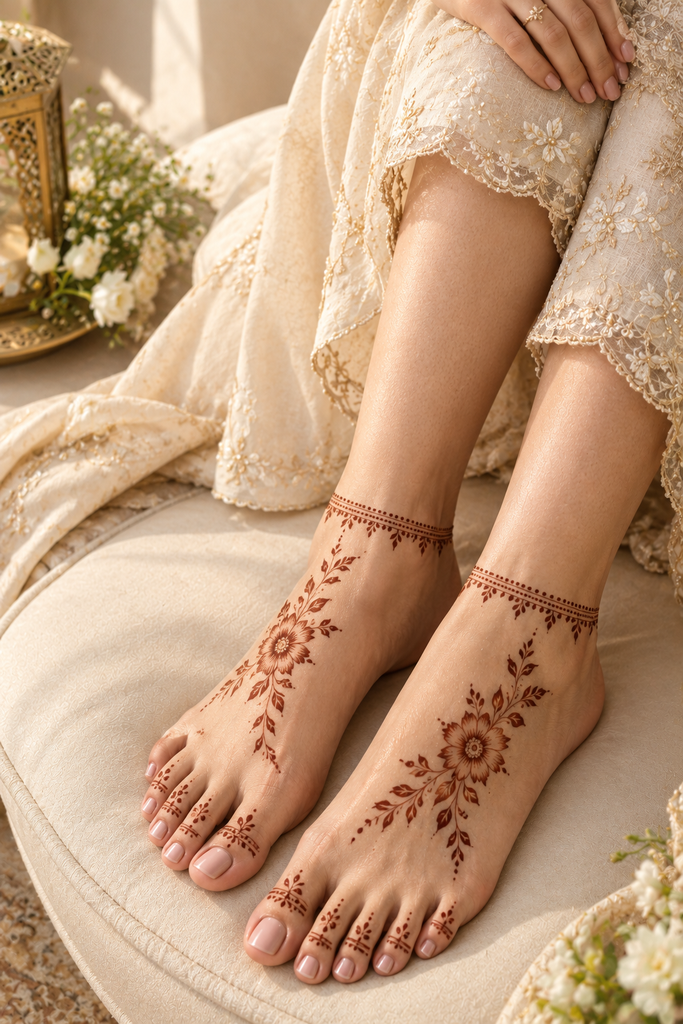
The best mehndi design does not always need the most detail. A small, thoughtfully placed pattern can look just as attractive as a complicated design. It can also save time and make application easier.
Simple patterns offer several advantages:
- Easy application: Flowers, dots, leaves, and curved lines are easier to draw than large, detailed compositions.
- Flexible styling: You can choose a tiny toe motif for a casual event or combine several patterns for a festive occasion.
- Budget-friendly beauty: Smaller designs often require less application time than full-foot patterns.
- Modern appearance: Open spaces between motifs create a clean, balanced look.
- Personal expression: You can combine traditional shapes with contemporary details to create a style you love.
These designs also work well with different types of footwear. Toe patterns complement open sandals, while ankle motifs look attractive with strappy heels. Floral trails can add a decorative touch to traditional outfits.
Remember that the final result depends on the artist’s skill, the product, your skin, and aftercare. Choose a design for its beauty and suitability rather than its complexity.
QUICK STYLE TIP
If you are unsure which design to choose, start with one small flower and a few leaves. You can always add more details later, but a clean design often looks more balanced than a crowded one.
25 Beautiful Foot Mehndi Designs for Girls
1. Simple Floral Foot Mehndi Design
A floral pattern is a lovely choice if you prefer a feminine and timeless look. Place one medium-sized flower near the center of the foot and surround it with a few small leaves and dots. Keep the rest of the foot clear so the flower becomes the main attraction.
This design suits Eid, family gatherings, and casual celebrations. Beginners can practice it using five simple petals, a small center, and short curved lines.
Best for: Beginners, everyday occasions, and minimal-style lovers.
2. Arabic Floral Foot Mehndi Design
Arabic mehndi often features flowing vines, bold flowers, and open spaces between the details. Begin near the outer edge of your foot and extend the pattern diagonally toward the ankle. Add leaves along the vine to create movement without making the design too crowded.
This pattern looks beautiful with traditional dresses, embroidered sandals, and festive outfits. You can keep the flowers small for a delicate appearance or choose slightly larger motifs for more impact.
Best for: Eid, parties, and festive gatherings.
3. Minimalist Toe Mehndi Design
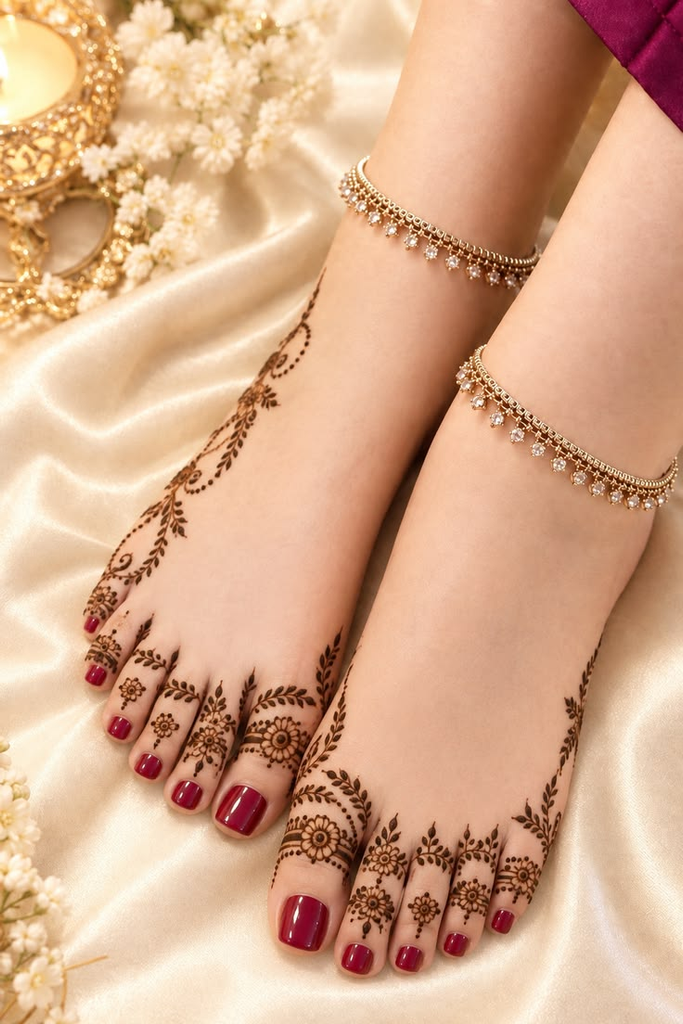
Not every design needs to cover the entire foot. A minimalist toe pattern uses tiny flowers, dots, or thin curved lines around one or two toes. You can leave the other toes undecorated to create a fresh, modern appearance.
This style works especially well with open-toe sandals. It is also a good option when you want a quick design that does not require many details.
Best for: Simple celebrations, everyday styling, and modern fashion.
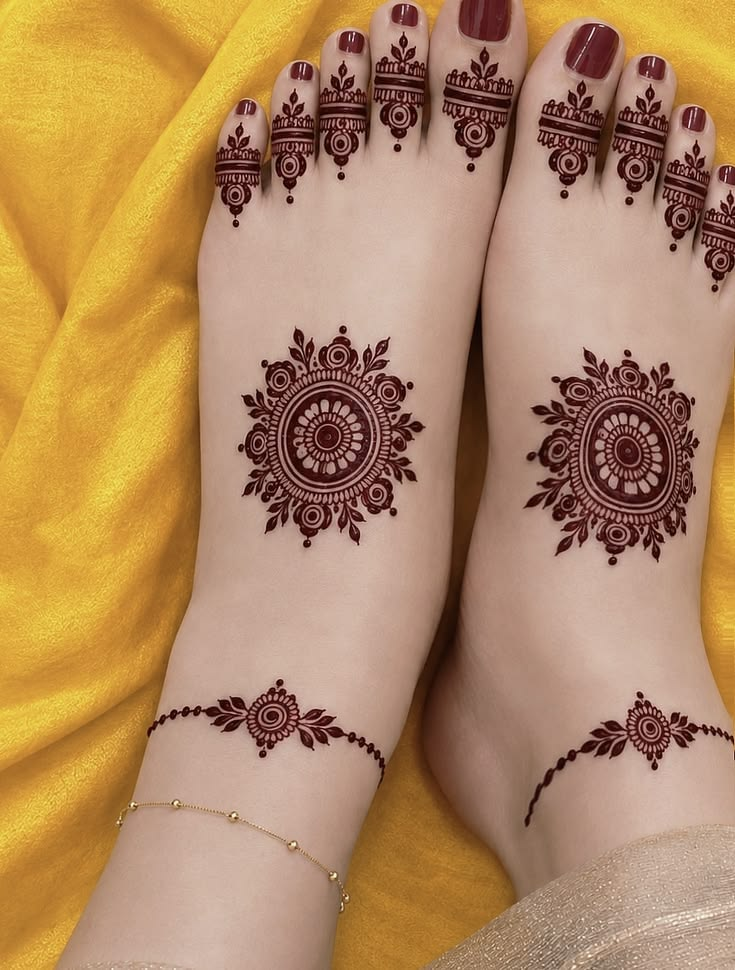
4. Mandala Foot Mehndi Design
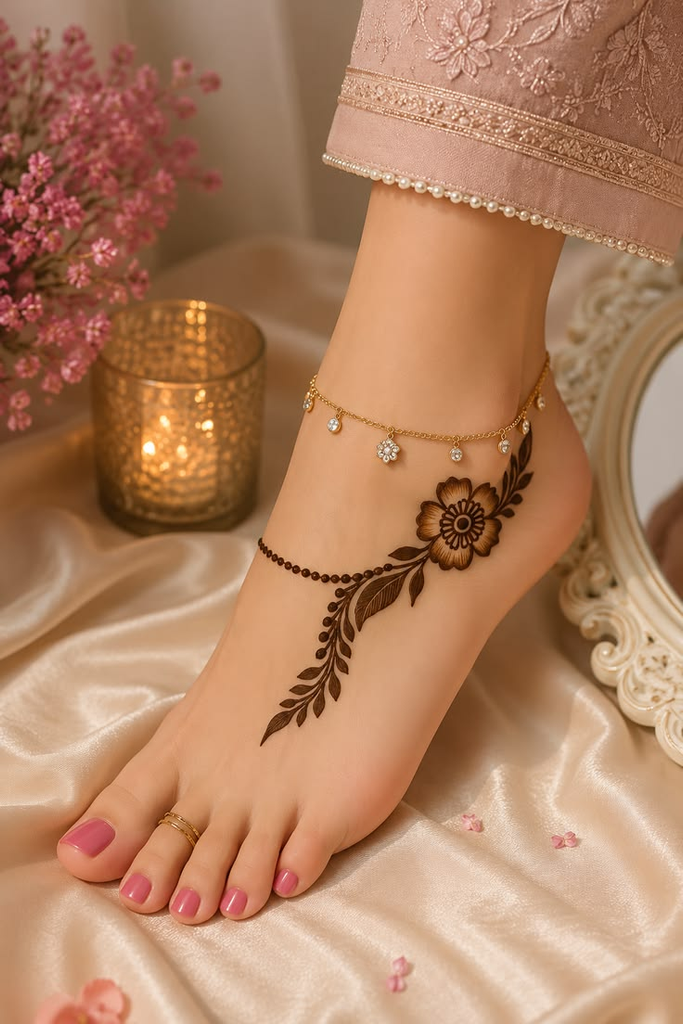
A mandala uses circles, repeated petals, and balanced decorative details. Place a small mandala in the center of the foot and add a few dots around its edges. The repeated shapes create a neat design that looks detailed without requiring full-foot coverage.
You can keep the mandala small for a minimalist style or add a second ring of petals for a festive look. This pattern is ideal for people who appreciate symmetry and traditional art.
Best for: Cultural celebrations, Eid, and symmetrical design lovers.
5. Leafy Vine Foot Mehndi Design
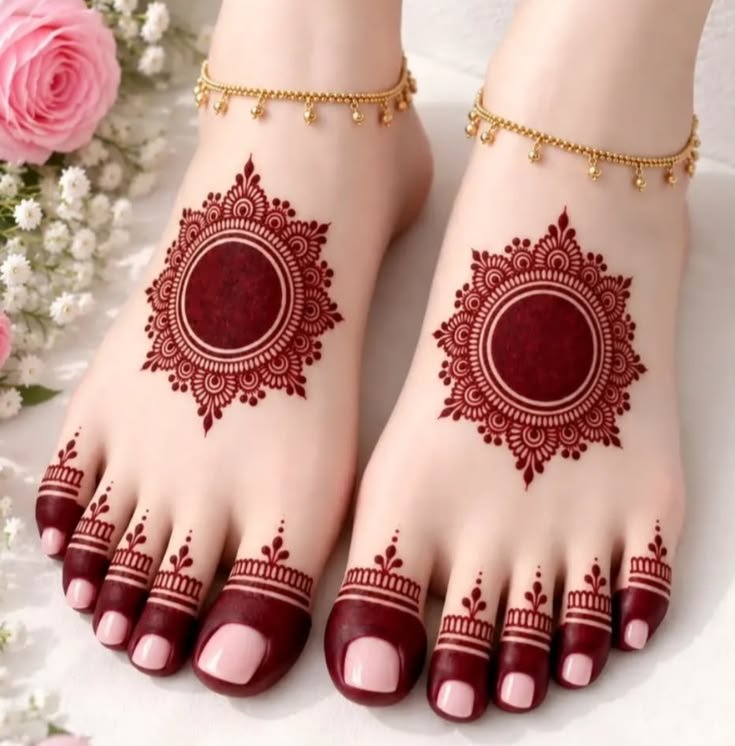
A leafy vine creates a graceful look using only a few elements. Draw a curved line from the toes toward the ankle and add small leaves along its length. You can include one tiny flower to give the design a little more detail.
This pattern follows the natural shape of the foot and leaves plenty of open space. It is an excellent choice for girls who enjoy botanical patterns and understated beauty.
Best for: Casual celebrations, minimalist styling, and garden events.
6. Bracelet-Style Ankle Mehndi Design
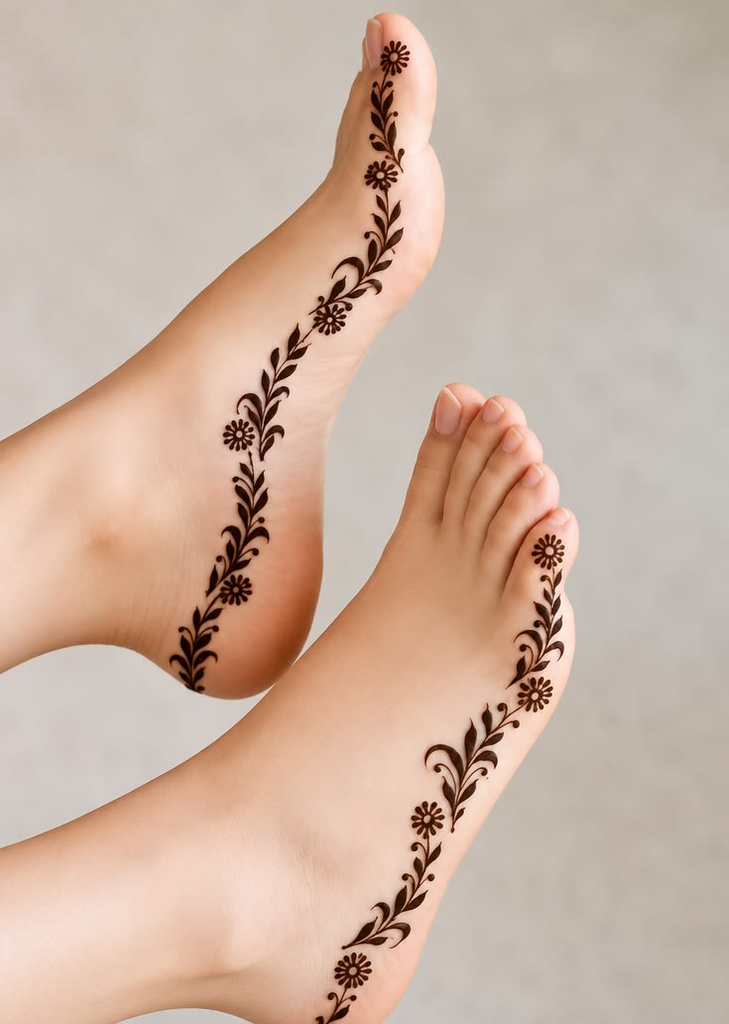
An ankle bracelet design creates the appearance of delicate jewelry using henna. Draw a thin curved band around the ankle and decorate it with tiny flowers, dots, and small diamond shapes. Add one hanging motif in the center for a graceful finish.
This pattern works well when you want to decorate the ankle rather than the entire foot. It also looks attractive with traditional clothing and open footwear.
Best for: Eid, weddings, and festive outfits.
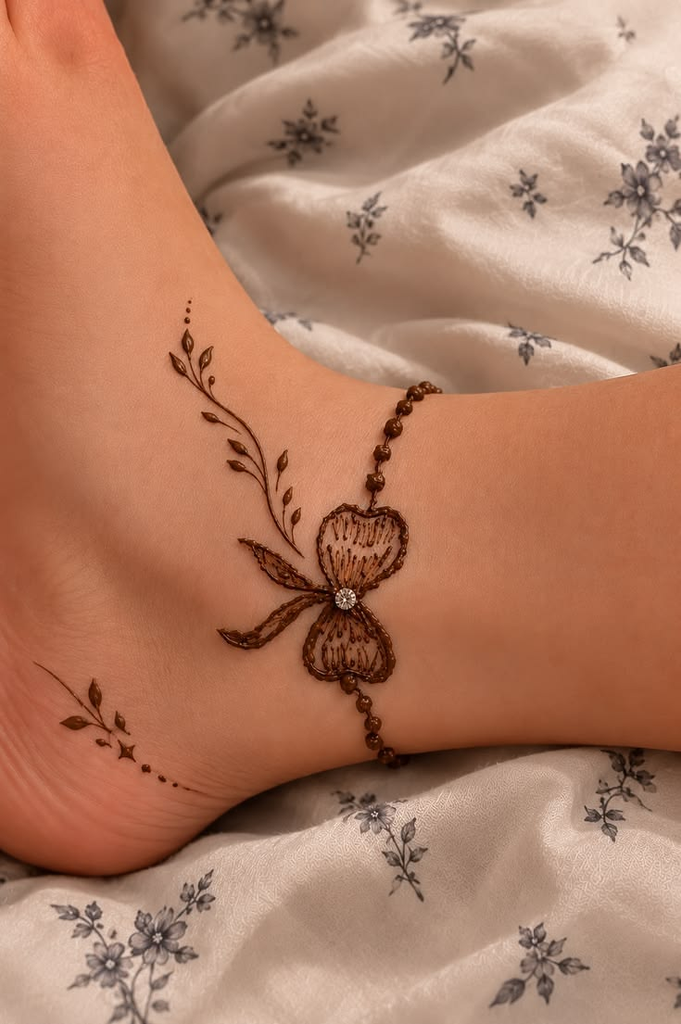
7. Paisley Foot Mehndi Design
Paisley motifs bring a traditional touch to foot mehndi. Place one paisley along the side of the foot and fill it with small curves, dots, and delicate lines. Add two tiny leaves nearby to complete the composition.
A single paisley can look beautiful without covering much skin. For a more decorative version, include two smaller paisleys around the main shape.
Best for: Eid, weddings, and traditional fashion.
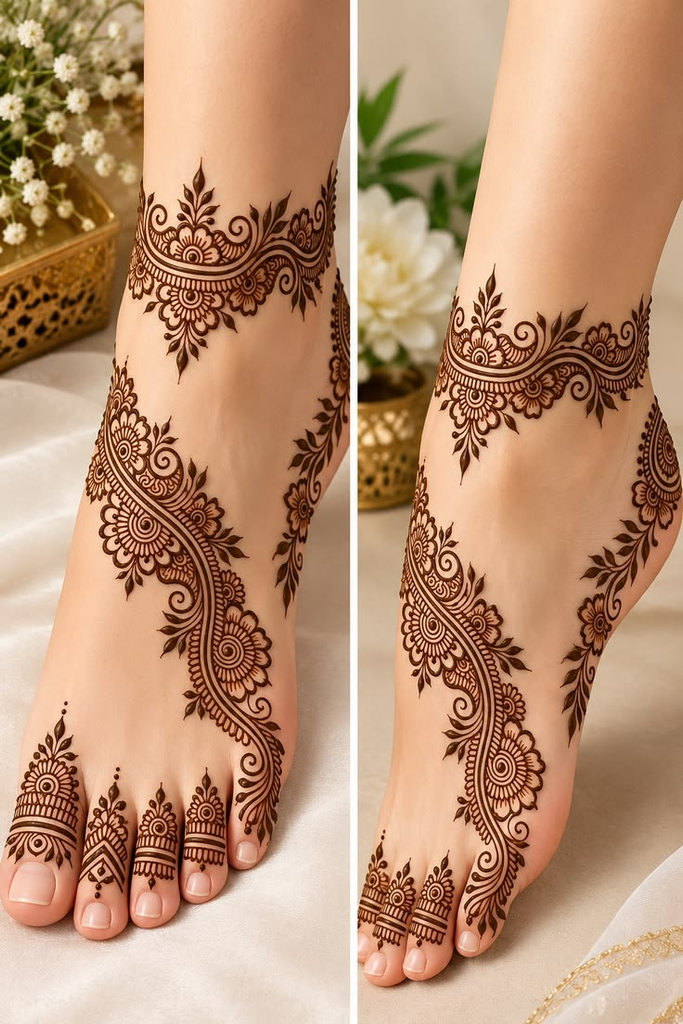
8. Dotted Chain Foot Mehndi Design
A dotted chain offers a delicate, jewelry-inspired look. Arrange small dots in a curved line from one toe toward the center of the foot. Connect selected dots with fine strokes and finish the line with a tiny flower or teardrop.
This pattern is suitable for beginners because it uses simple shapes and requires little coverage. It can also complement decorative sandals without competing with their design.
Best for: Beginners, minimalist looks, and quick application.
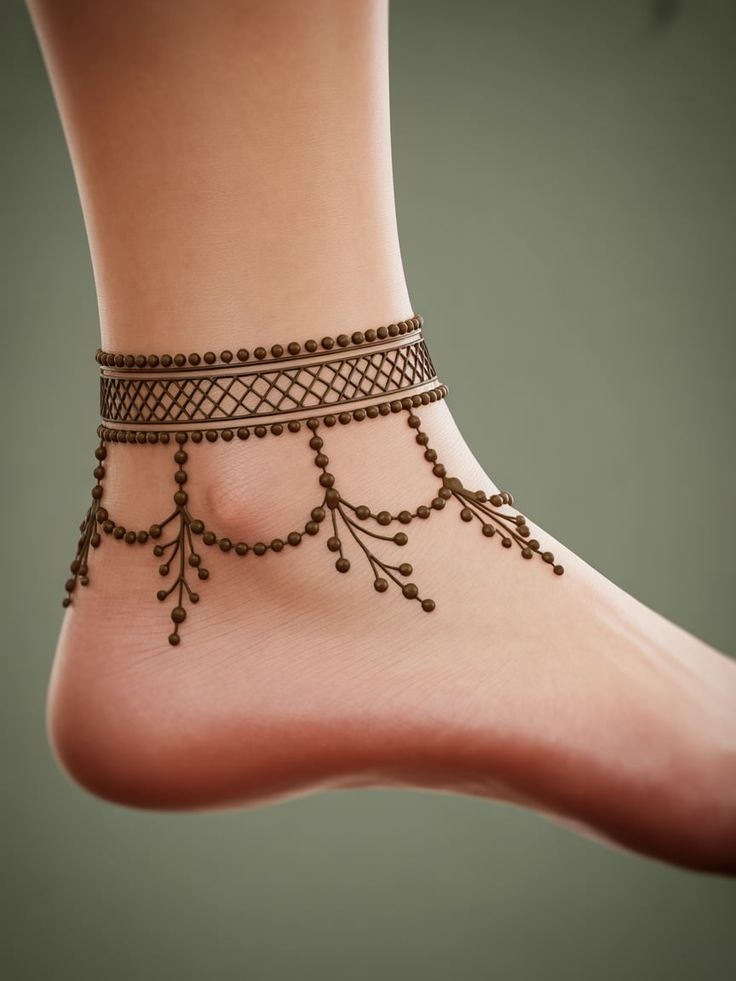
9. Half-Moon Foot Mehndi Design
A half-moon motif offers a creative alternative to traditional flowers. Place a crescent shape near the ankle or center of the foot and decorate its edge with tiny dots and small petals. Leave the inside relatively open to keep the shape clear.
You can create matching crescents on both feet or combine one crescent with a small floral motif. This design suits girls who prefer delicate patterns with a unique touch.
Best for: Evening celebrations, modern festive looks, and creative styling.
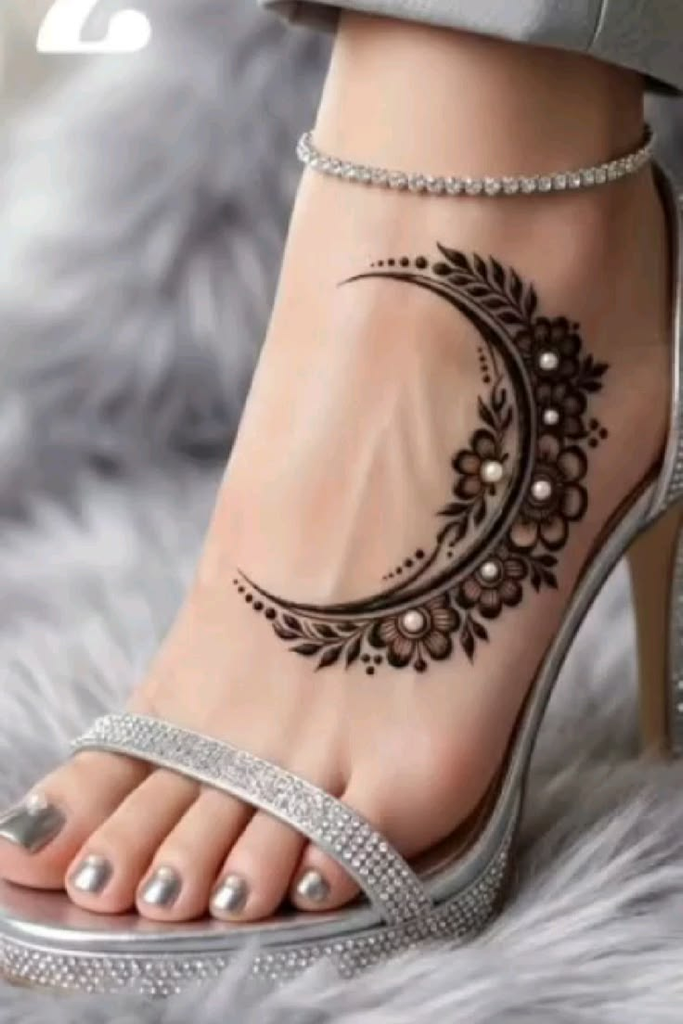
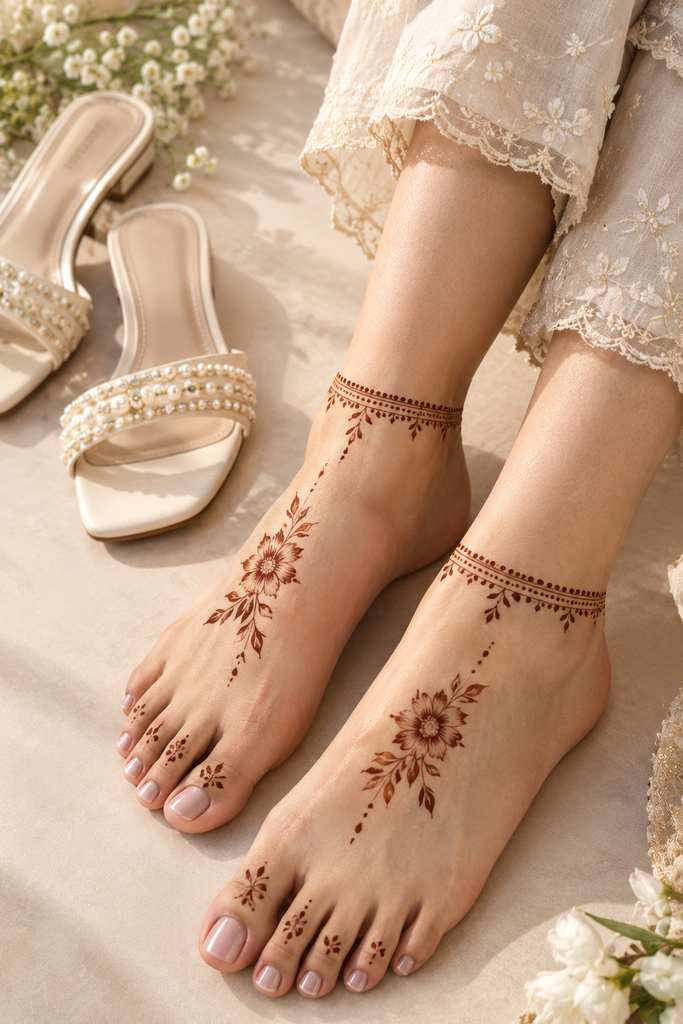
10. Floral Trail from Toes to Ankle
A floral trail connects several small flowers with curved stems and leaves. Start near the toes and let the pattern travel upward toward the ankle. Use flowers of different sizes to create a natural rhythm while keeping enough space between each motif.
This design provides more coverage than a single flower but still looks light and graceful. It also photographs beautifully from above, making it suitable for a beauty blog or Pinterest feature image.
Best for: Eid, family celebrations, and festive photographs.
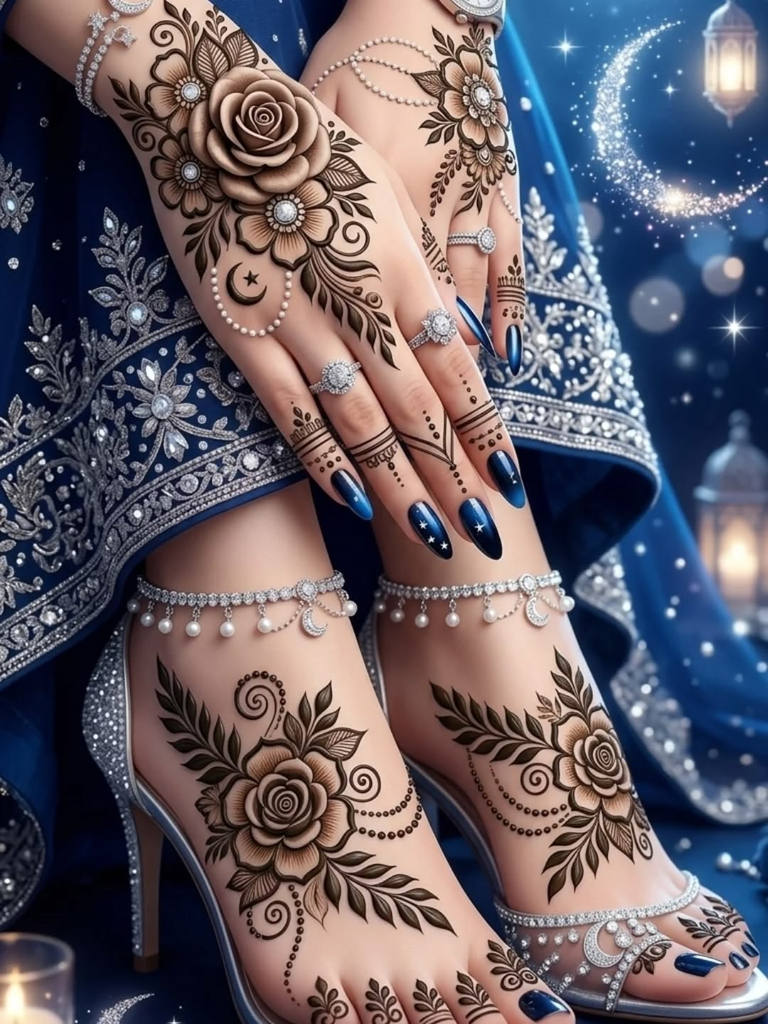
11. Anklet and Toe Ring Mehndi Design
This design combines an anklet-inspired band with a slim line leading toward one toe. Decorate the band with small dots and petals, then finish the connecting line with a tiny flower or teardrop.
The result creates the appearance of coordinated foot jewelry. You can keep the lines thin for a modern style or add a few floral details for a festive look.
Best for: Weddings, Eid, and traditional sandals.
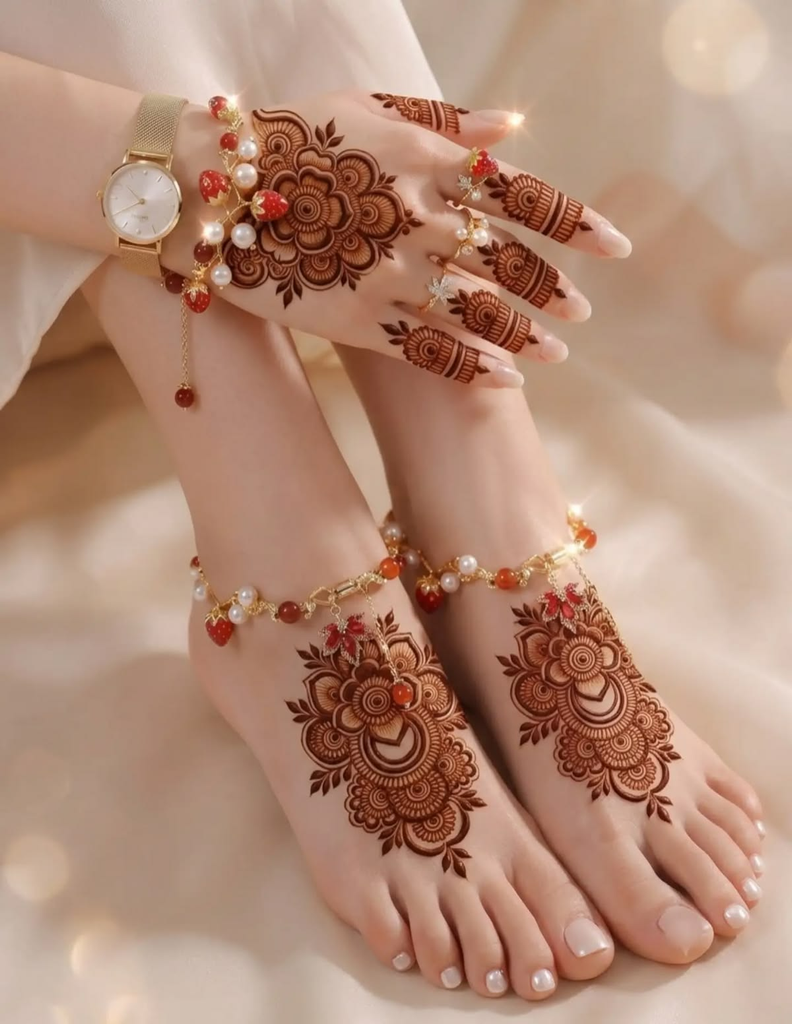
12. Simple Geometric Foot Mehndi Design
Geometric patterns use diamonds, triangles, straight lines, and dots. Arrange a few repeating shapes along the side or center of the foot. Keep the spacing even so every detail remains clear.
Best for: Modern celebrations, casual events, and minimalist fashion.
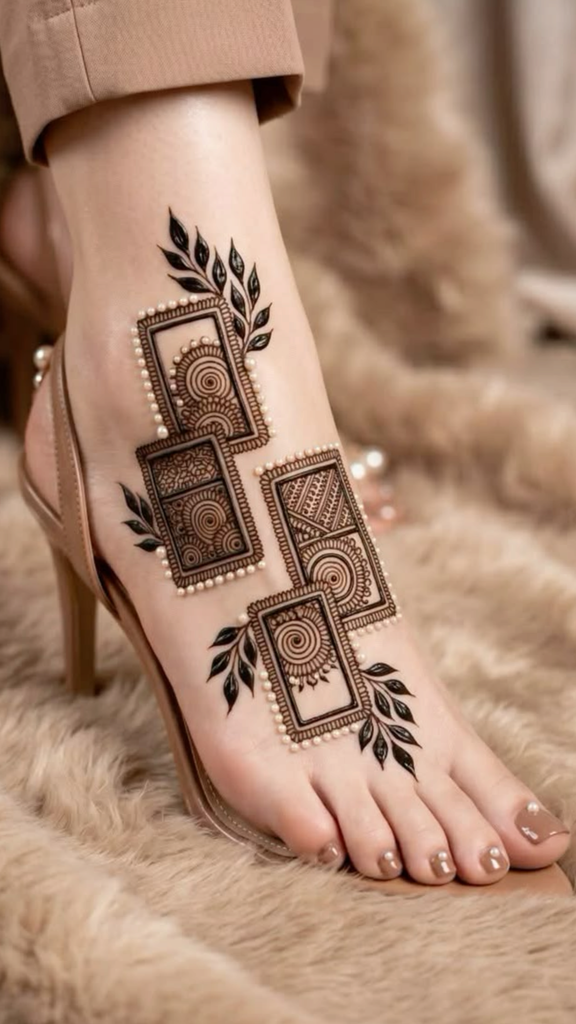
13. Simple Rose Foot Mehndi Design
A rose motif offers a romantic touch. Place a small rose near the outer edge of the foot and add two or three leaves around it. A few tiny dots can finish the pattern without making it look crowded.
Choose this design if you enjoy floral art but want something different from ordinary five-petal flowers. It pairs well with pastel clothing and delicate sandals.
Best for: Birthdays, Eid, and family gatherings.
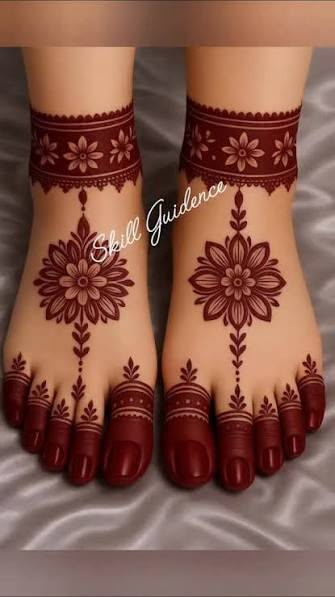
14. Simple Butterfly Foot Mehndi Design
A butterfly motif adds a playful, youthful touch. Place one small butterfly near the ankle or above the toes and surround it with tiny dots or a curved line. Keep the wings balanced to make the design look neat.
You can choose a simple outline or add tiny patterns inside the wings. This idea works well for girls who love cute motifs and modern henna art.
Best for: Parties, casual celebrations, and spring occasions.
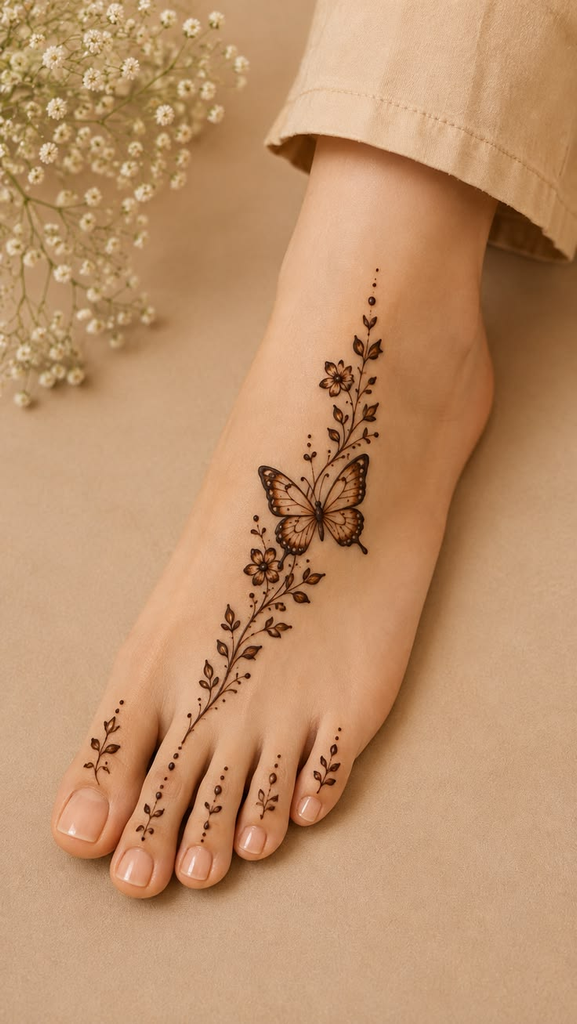
15. Diagonal Foot Mehndi Design
A diagonal pattern travels from one side of the foot toward the other. Combine a small flower, a curved stem, and a few leaves to create a graceful line. The diagonal placement gives the design movement without requiring many motifs.
Best for: Eid, dinners, and festive events.
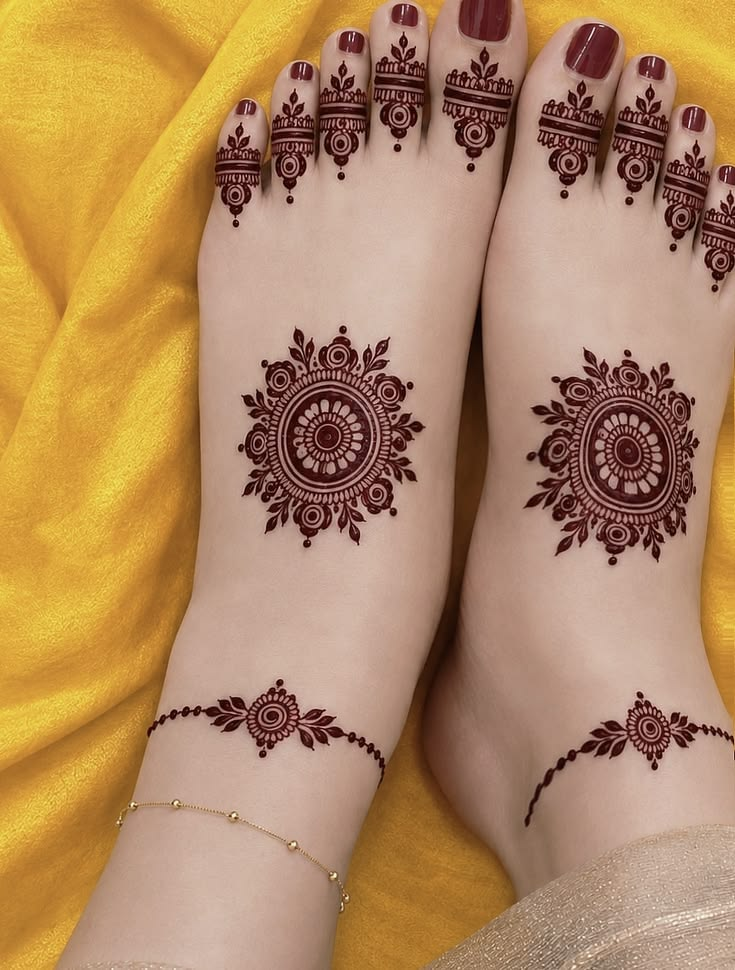
16. Simple Heart Foot Mehndi Design
A tiny heart provides a sweet alternative to floral motifs. Place one heart near the ankle or outer edge of the foot and surround it with two small leaves or a few dots. You can also create matching heart motifs on both feet.
Keep the design simple so the heart remains easy to recognize. This style suits anyone who prefers cute, contemporary henna designs.
Best for: Birthday parties, casual events, and personal celebrations.
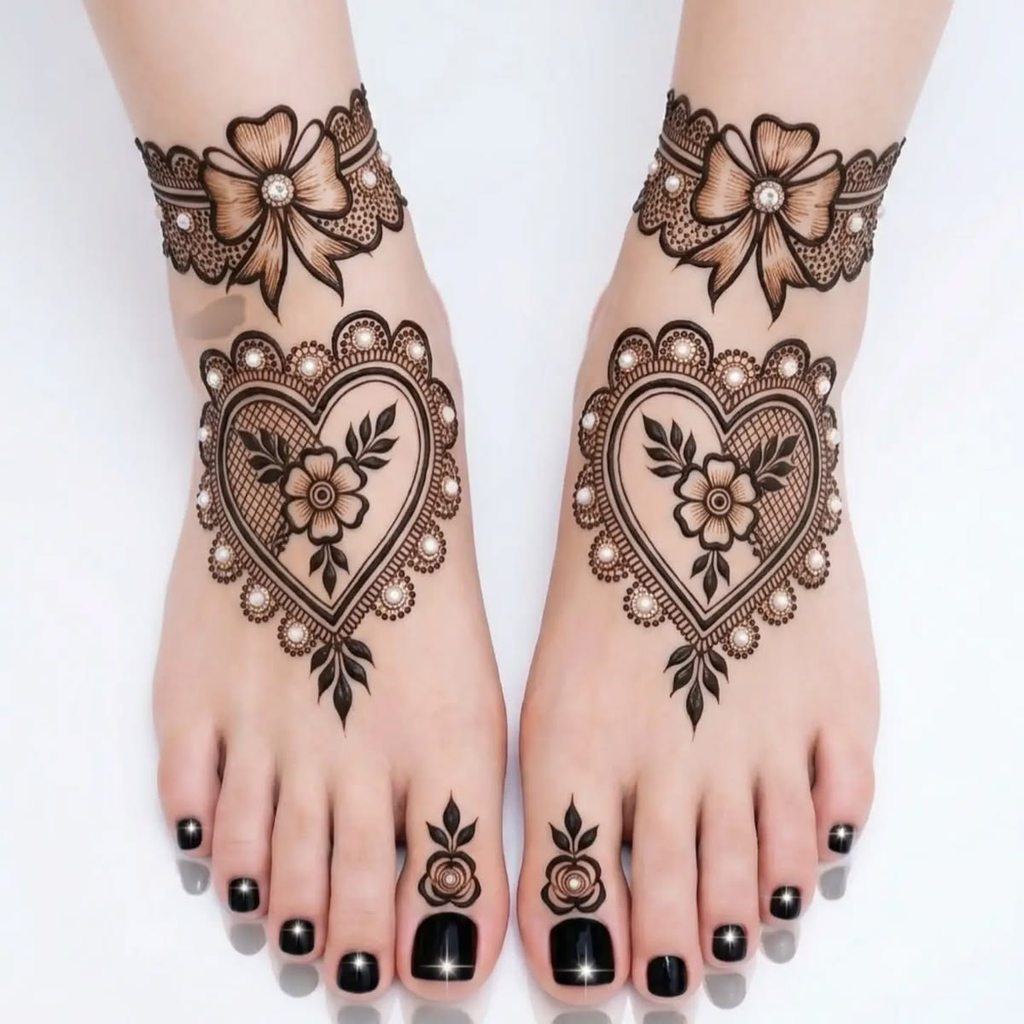
17. Simple Floral Anklet Mehndi Design
A floral anklet uses small flowers to form a curved band around the ankle. Connect the flowers with fine lines or dots and place one slightly larger flower in the center. This creates the appearance of delicate jewelry drawn on the skin.
The pattern works well when you want to decorate the ankle rather than the entire foot. It also complements traditional dresses and open-toe footwear.
Best for: Eid, wedding functions, and festive outfits.
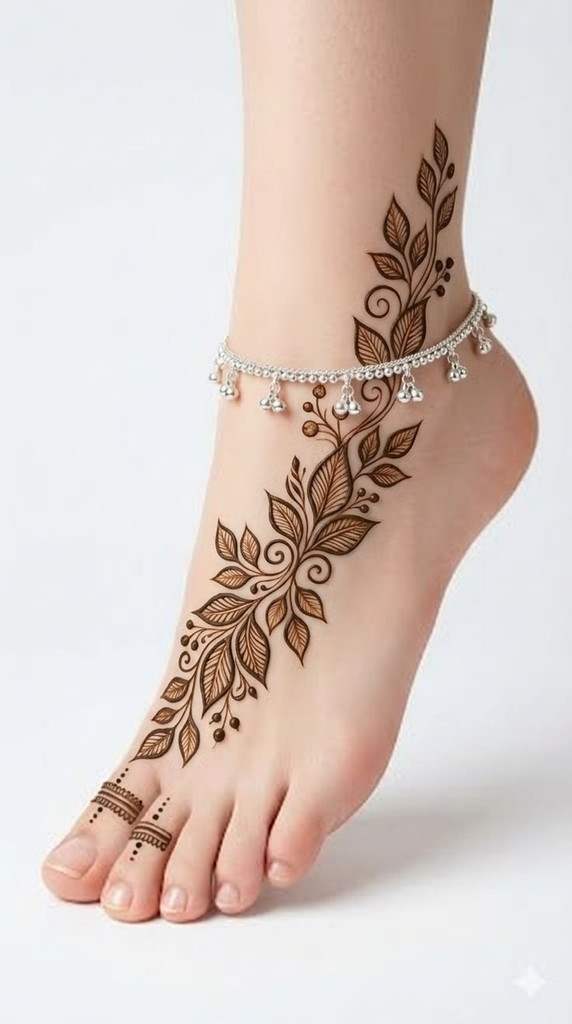
18. Simple Crisscross Foot Mehndi Design
Crisscross patterns use intersecting lines to form small diamonds or a net-like effect. Draw a few fine lines across a small section of the foot and add dots at selected intersections. Leave the surrounding skin open to keep the design light.
This style suits girls who enjoy geometric patterns but still want a traditional henna finish. A tiny floral motif can soften the design if you prefer a mixed style.
Best for: Modern celebrations, parties, and geometric design lovers.
19. Simple Peacock-Inspired Foot Mehndi Design
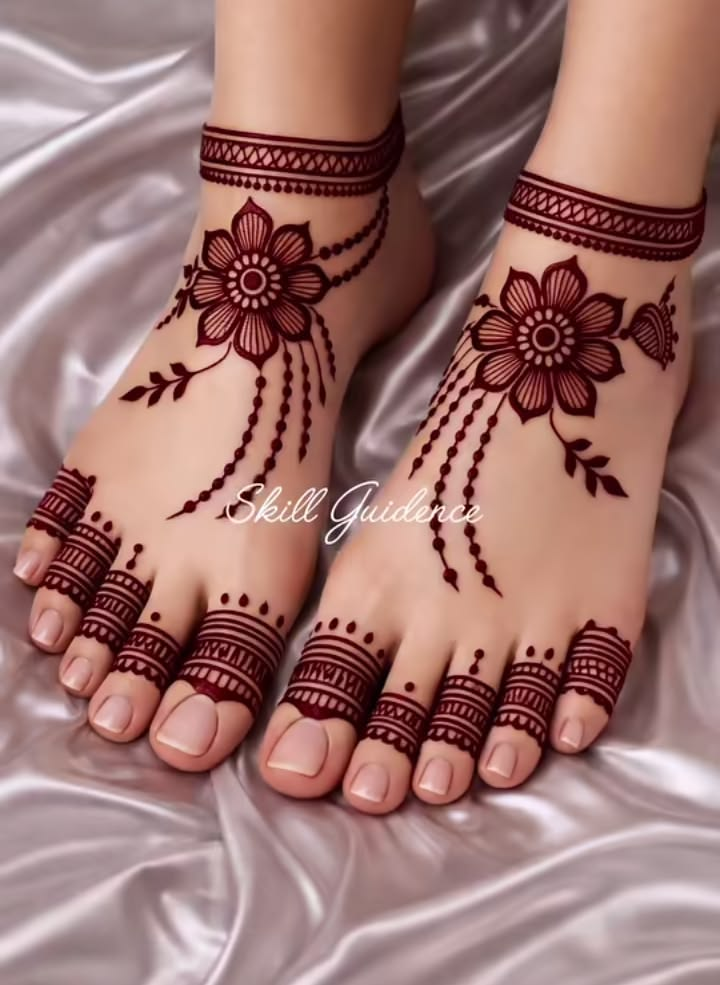
Peacock motifs are a familiar feature of South Asian decorative art. For a simple version, use a small curved body and a few stylized feather shapes. Add fine lines and dots to suggest feathers without creating a heavy pattern.
This design suits girls who appreciate traditional motifs with a creative touch. It looks particularly attractive with embroidered clothing and traditional sandals.
Best for: Weddings, Eid, and cultural celebrations.
20. Flower-and-Dot Foot Mehndi Design
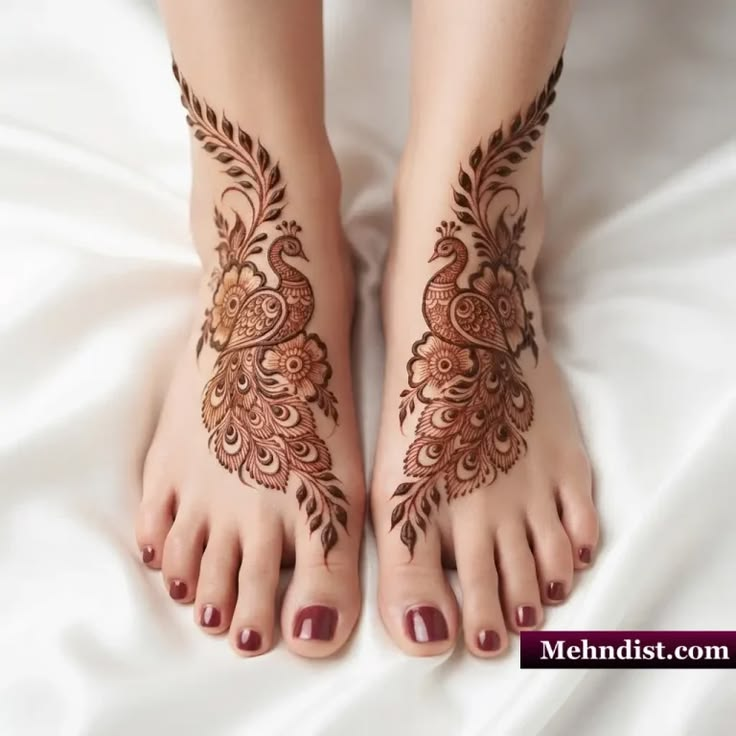
Sometimes, a few small details create the prettiest results. Combine tiny flowers with neat dots arranged near the toes or along the outer edge of the foot. You can use one central flower or several smaller flowers in a loose trail.
This design is easy to customize and works well when you have limited time. It is also a useful starting point for beginners who want to practice flower shapes and dot placement.
Best for: Beginners, everyday occasions, and quick festive styling.
21. Simple Leaf-Fan Foot Mehndi Design
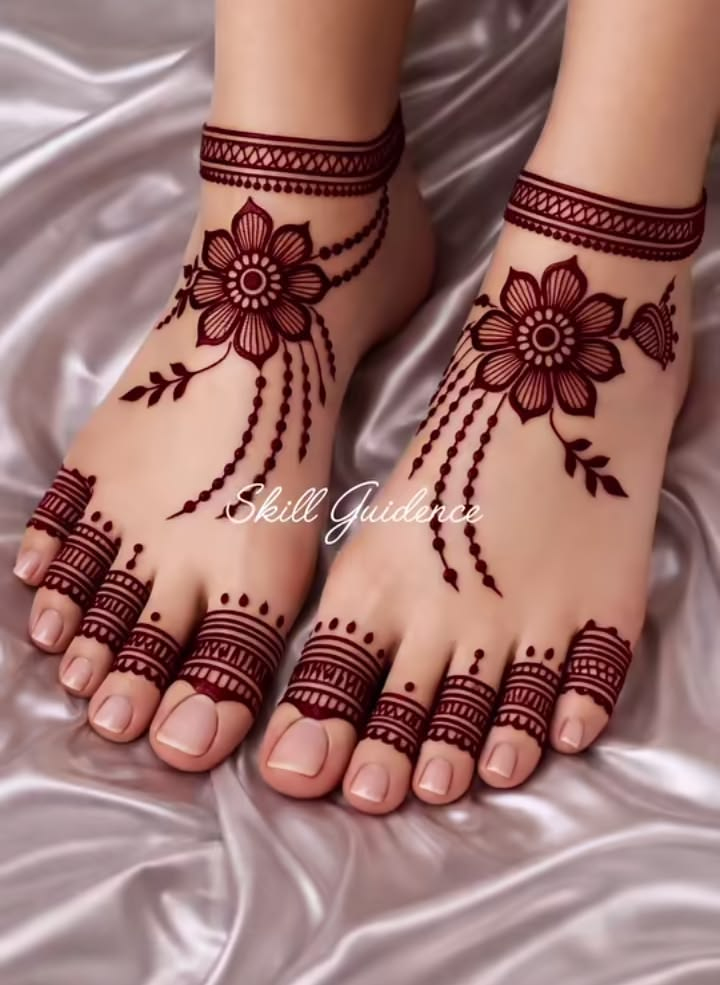
A leaf-fan motif uses several leaves arranged in a fan shape. Place the motif near the ankle or center of the foot, then add a curved stem and a few dots. The repeated leaves create texture while keeping the overall pattern simple.
Choose this design if you enjoy botanical details but want a fresh alternative to floral mehndi. You can also repeat the same motif on the other foot for a coordinated look.
Best for: Casual celebrations, nature-inspired styling, and garden events.
22. Simple Bridal-Inspired Foot Mehndi Design
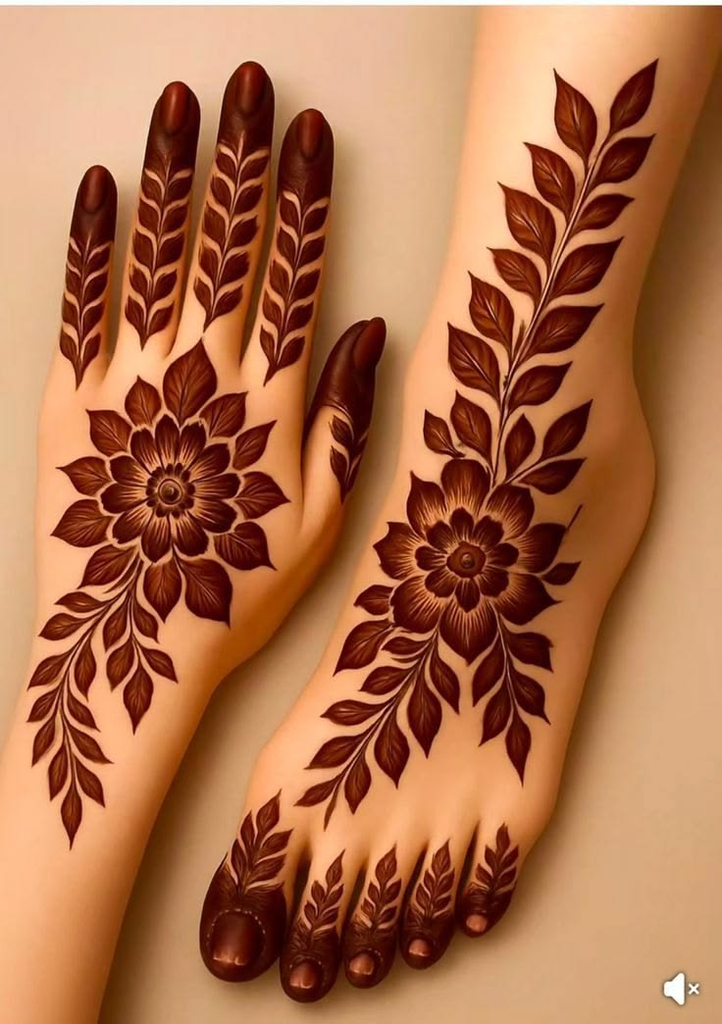
You do not need a full bridal pattern to create a festive look. Choose a central flower, add a few small paisley shapes, and connect the details with thin vines. Keep the design smaller than a traditional bridal composition to maintain its simple appearance.
This pattern works well for wedding guests, engagement celebrations, and girls who appreciate traditional art with fewer details. You can also match its floral elements with the embroidery on your outfit.
Best for: Engagements, wedding guests, and formal celebrations.
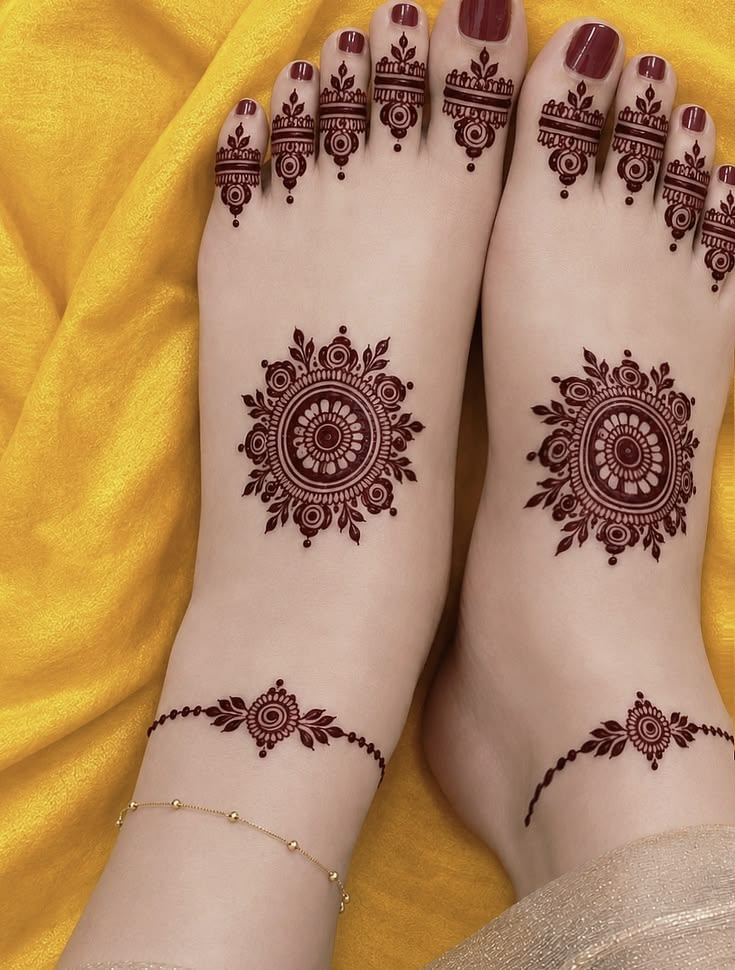
23. Bracelet-and-Flower Foot Mehndi Design
This pattern combines a delicate ankle bracelet with a small flower on the foot. Draw a thin band around the ankle and extend a curved line downward toward the flower. Add tiny dots along the connecting line to bring the elements together.
The result resembles a coordinated piece of foot jewelry. It is an excellent choice if you want a design that looks detailed in photographs without covering the entire foot.
Best for: Eid, festive dinners, and traditional outfits.
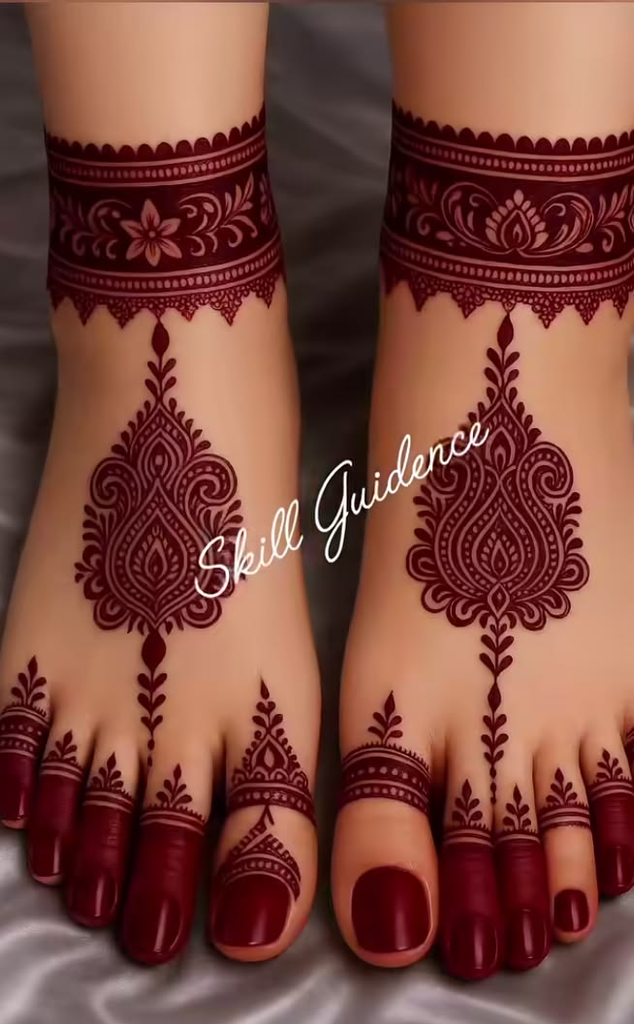
24. Simple Lotus Foot Mehndi Design
A lotus motif creates a graceful design with layered petals and a balanced shape. Place a small lotus near the center of the foot or just above the toes. Add a few tiny dots or a curved border to complete the pattern.
This style suits girls who enjoy symmetrical floral art and traditional motifs. Keep it small for an everyday look or add fine details for a more decorative occasion.
Best for: Cultural events, Eid, and family celebrations.
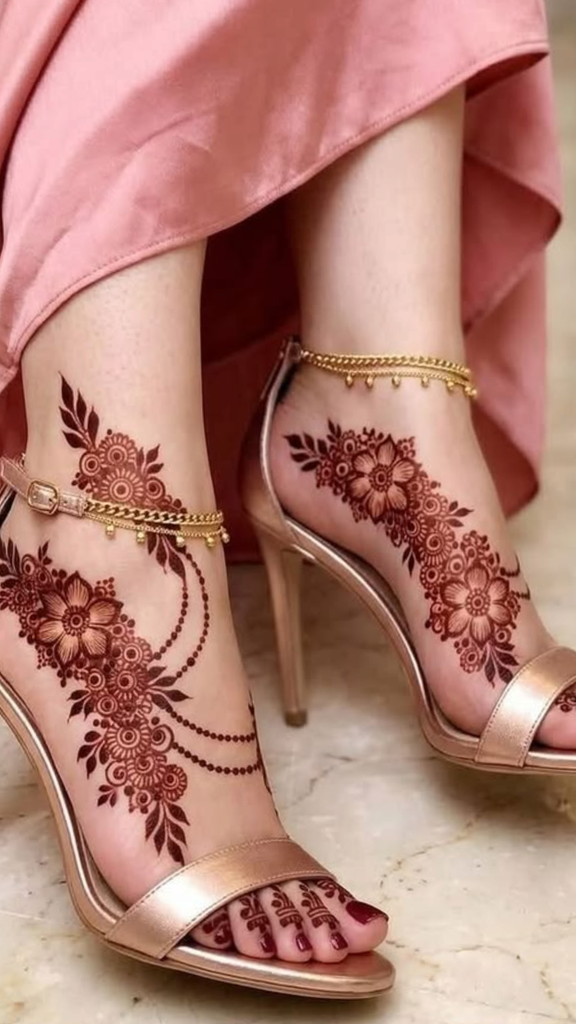
25. Simple Full-Foot Floral Trail Mehndi Design
If you want more coverage while keeping your design graceful, choose a floral trail that travels from the toes toward the ankle. Combine medium-sized flowers with leafy vines, tiny paisleys, and small dots. Leave open spaces between the motifs so the design does not look crowded.
This style brings several classic mehndi elements together. It suits Eid, wedding functions, and other occasions when you want your feet to complement a traditional outfit.
Best for: Festive events, weddings, and traditional celebrations.
How to Choose the Best Mehndi Design for Your Occasion
Choosing a design becomes easier when you think about the event first. A casual family gathering may call for a tiny flower, while a wedding can be the perfect opportunity for a more detailed floral trail.
For Eid Celebrations
Eid outfits often include embroidery, colorful fabrics, and traditional footwear. Floral trails, Arabic vines, and ankle bracelet patterns can complement these details without competing with them.
If you plan to wear embellished sandals, choose a design with open spaces. This allows the footwear and henna to look balanced together.
For Weddings and Engagements
Wedding celebrations often call for more decorative patterns. A bridal-inspired floral motif or paisley design can create a festive appearance without requiring a full bridal composition.
Guests can choose smaller patterns that complement their outfits. Brides may prefer a more detailed design if it matches their overall look.
For Everyday Style
Minimalist toe patterns, small flowers, and dotted chains suit casual occasions. They take less time to apply and work well with simple footwear.
Choose one motif and keep the rest of the design light. This makes the pattern easier to maintain and gives it a clean appearance.
For Modern Fashion
Geometric shapes, butterfly motifs, and crescent patterns offer alternatives to traditional floral styles. You can also combine a small geometric pattern with a vine for a unique result.
The goal is to choose a pattern that feels comfortable and matches your personal taste.
STYLE MATCHING TIP
- Floral outfits pair well with flowers and leafy vines.
- Traditional embroidered dresses complement paisley and mandala motifs.
- Minimal outfits look attractive with geometric patterns or tiny toe designs.
- Open-toe sandals pair well with anklet and dotted-chain patterns.
Budget-Friendly Foot Mehndi Tips
You can enjoy beautiful mehndi without paying for an elaborate design. The key is to plan the pattern before application and choose details that suit your budget.
1. Choose One Main Motif
A central flower, small mandala, or simple paisley can create an attractive design on its own. Add a few leaves or dots if you want more detail.
2. Practice Before Applying Mehndi
If you want to create your design at home, practice on paper first. Start with dots, curved lines, and simple petals. Once you feel comfortable with the shapes, you can plan how they will fit together.
3. Ask About the Price in Advance
Before booking a mehndi artist, explain the size and style you want. Ask whether the quoted price covers both feet and whether extra details cost more.
4. Use a Clear Reference Image
Save your favorite design and show it to the artist before the appointment. A reference helps you communicate the size, placement, and level of detail you prefer.
5. Avoid Unnecessary Additions
You do not need to fill every open space. A few carefully placed motifs can create a polished look while keeping application time manageable.
BUDGET-FRIENDLY CALLOUT
Want a beautiful look on a small budget?
Choose one floral motif, a dotted chain, or a delicate ankle band. Ask for a small design on both feet and agree on the final price before the artist begins.
A simple design can look elegant without the extra time and cost of a full-foot pattern.
How to Prepare Your Feet Before Applying Mehndi
Good preparation helps you begin with clean, comfortable skin. You do not need an expensive beauty routine.
Clean Your Feet Gently
Wash your feet with mild soap and water, then dry them. Avoid applying mehndi over cuts, irritated areas, or inflamed skin.
Choose Comfortable Footwear
Think about the shoes or sandals you plan to wear after your mehndi session. Tight footwear can rub against the design and make the area uncomfortable.
Plan Your Design Placement
Look at your chosen reference and decide where you want the main motif. A flower near the center, a vine along the side, or a band around the ankle can each create a different effect.
Check the Product Ingredients
Choose products with clear ingredient information and follow the manufacturer’s instructions. Do not assume that every product labeled natural or herbal is automatically safe.
The U.S. Food and Drug Administration’s henna safety guidance explains concerns about products marketed as henna and black henna, including the risk associated with PPD in some products.
How to Care for Your Foot Mehndi
Aftercare can help you avoid unnecessary rubbing and allow the stain to develop according to the product instructions.
Follow the Artist’s Instructions
Different products and application methods may require different aftercare. Follow the directions provided by your artist or the product manufacturer rather than relying on a single universal method.
Avoid Excessive Rubbing
Repeated friction from tight shoes or rough washing can affect the appearance of a henna stain. Be gentle when cleaning your feet and avoid scrubbing directly over the design.
Allow the Color to Develop Naturally
Natural henna often starts with an orange stain that gradually deepens into a reddish-brown shade. The final color varies with the product, application, and individual skin.
Do not expect an exact shade at a specific time. Give the stain time to develop according to the product instructions.
Avoid Unsafe Darkening Products
Never use hair dye to darken a henna design on your skin. Some products marketed as black henna contain PPD, which can cause serious skin reactions.
Read the FDA’s information about hair dyes and PPD before choosing a product. If you experience burning, swelling, blistering, or a rash, stop using the product and seek medical advice.
IMPORTANT SAFETY CALLOUT
Avoid black henna products with unclear ingredients. Some contain PPD, a hair-dye ingredient that can cause dangerous skin reactions when applied to the skin.
The FDA provides detailed information in its guide to henna, mehndi, and black henna safety.
Common Mistakes to Avoid
Even a simple design can lose its beauty if the pattern becomes crowded or the application feels rushed. Keep these common mistakes in mind.
Adding Too Many Details
Flowers, dots, vines, and paisleys can work beautifully together, but too many motifs may make the pattern difficult to see. Choose one main element and use smaller details to support it.
Choosing a Design That Does Not Suit Your Footwear
A beautiful pattern may remain hidden under closed shoes. Consider your planned footwear before deciding where to place the design.
Rushing the Application
Fine lines and small motifs need careful placement. If you apply mehndi at home, take your time and practice the design beforehand.
Ignoring Product Safety
Do not use a product with unclear ingredients simply because it promises a very dark or instant stain. Check the label and avoid products that cause irritation.
Expecting Identical Results
A design may look slightly different on your skin than it does in a reference image. The artist’s technique, product, skin, and application all affect the final appearance.
Frequently Asked Questions
1. Which foot mehndi design is easiest for beginners?
Tiny floral motifs, dotted chains, and simple toe patterns are excellent starting points. They use basic shapes and do not require full-foot coverage. Practice on paper before trying the pattern on your skin.
2. Which design is best for Eid?
Arabic floral vines, floral trails, ankle bracelet patterns, and mandala motifs all suit Eid celebrations. Choose a pattern that complements your outfit and footwear.
3. How long does foot mehndi take to apply?
A tiny toe motif may take only a few minutes, while a detailed floral trail can take considerably longer. The application time depends on the design’s size, the artist’s speed, and the amount of detail.
4. How long does a henna stain last?
A stain may remain visible for several days to a couple of weeks, but the duration varies. Washing, friction, skin renewal, the product, and application quality all affect how quickly the stain fades.
5. Can I apply foot mehndi at home?
Yes, you can practice simple designs at home using basic shapes such as flowers, leaves, and dots. Choose a product with clear ingredient information and follow its directions. Avoid products that cause irritation or promise instant black staining.
6. Which design looks best with sandals?
Toe motifs, dotted chains, floral trails, and ankle bracelet designs pair well with open-toe sandals. Choose a design that remains visible with the footwear you plan to wear.
7. Are simple designs suitable for weddings?
Yes. Paisley motifs, floral patterns, and bracelet-inspired designs can look elegant at weddings. Wedding guests may prefer smaller patterns, while brides often choose more detailed designs to complement their outfits.
8. How can I make my design look neat?
Choose a clear reference image, keep the pattern balanced, and leave enough space between motifs. Fine lines and evenly spaced dots can make even a small design look polished.
9. Is black henna safe for foot designs?
Do not assume that black henna is safe. Some products marketed as black henna contain PPD, which can cause serious skin reactions. Read the FDA’s official safety guidance before selecting a product.
10. What should I do if my skin reacts to henna?
Stop using the product and seek medical advice if you develop a rash, swelling, or irritation. Severe swelling, blistering, or difficulty breathing requires urgent medical attention. Keep the product packaging or ingredient list available if you need to discuss the reaction with a healthcare professional.
11. Can I combine two different mehndi styles?
Yes. You can combine a small floral motif with a geometric border or pair a paisley with a leafy vine. Choose elements that complement each other and leave enough open space to keep the design clear.
12. How do I choose between a small and a full-foot design?
Think about your occasion, available time, budget, and personal style. A small design suits everyday events and quick application, while a fuller floral trail works well for festive occasions when you want more decoration.
Conclusion: Find a Design That Matches Your Style
Foot mehndi offers a beautiful way to celebrate traditions, express your personality, and complete a festive outfit. You do not need a complicated pattern to create an attractive look. A tiny flower, a delicate anklet, or a graceful leafy vine can bring plenty of charm.
The 25 ideas in this guide offer inspiration for beginners, minimalist-style lovers, and girls who prefer more decorative patterns for Eid or weddings. You can choose a design based on your outfit, footwear, budget, and the time you have available.
Start with a pattern that feels comfortable and suits your taste. Save a reference image, check the product ingredients, and take your time with the application. Most importantly, choose a design that makes you feel happy and confident.
A simple design can make a special occasion feel even more memorable.